


Description
Key Features:
1.Single Directional Layout:
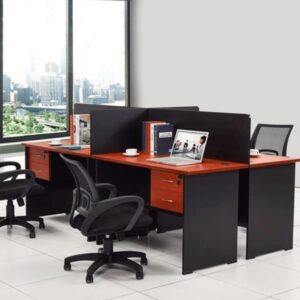
The one-way design ensures that all employees face the same direction, which helps in creating a uniform work environment and minimizes distractions.
2.Ergonomic Desk Design:
Features such as adjustable height, keyboard trays, and ergonomically designed chairs ensure that employees can work comfortably for long hours while maintaining good posture.
3.Privacy Panels:
To maintain focus and minimize distractions, privacy panels or partition walls are often added to the workstation, providing personal space within an open office layout.
4.Storage Solutions:
A typical one-way workstation may come with built-in storage, such as drawers, file cabinets, or shelves. This allows employees to organize their workspace while keeping their desk free of clutter.
5.Modular Design:
The workstation is often modular, meaning that it can be easily reconfigured to suit different office layouts and sizes. This flexibility allows it to be adapted for future office needs.
6.Cable Management:
Most one-way office workstations include integrated cable management systems to keep wires and cables organized, reducing clutter and ensuring a clean, professional workspace.
7.Collaborative Space:
While designed for individual work, the open layout of the one-way workstation allows for easy collaboration and communication with neighboring desks, fostering teamwork in an office setting.
8.Durable Materials:
Constructed from high-quality materials such as laminate, wood, or metal, these workstations are durable and built to withstand heavy use over time.
9.Space Optimization:
Ideal for small office spaces, the one-way workstation design maximizes the use of floor space while offering each employee their own workstation.
10.Aesthetic and Professional:
The workstation often has a sleek, clean design, contributing to a professional office environment. It may be available in different finishes like wood veneer, metal, or glass to match the office décor.



Reviews
There are no reviews yet.